
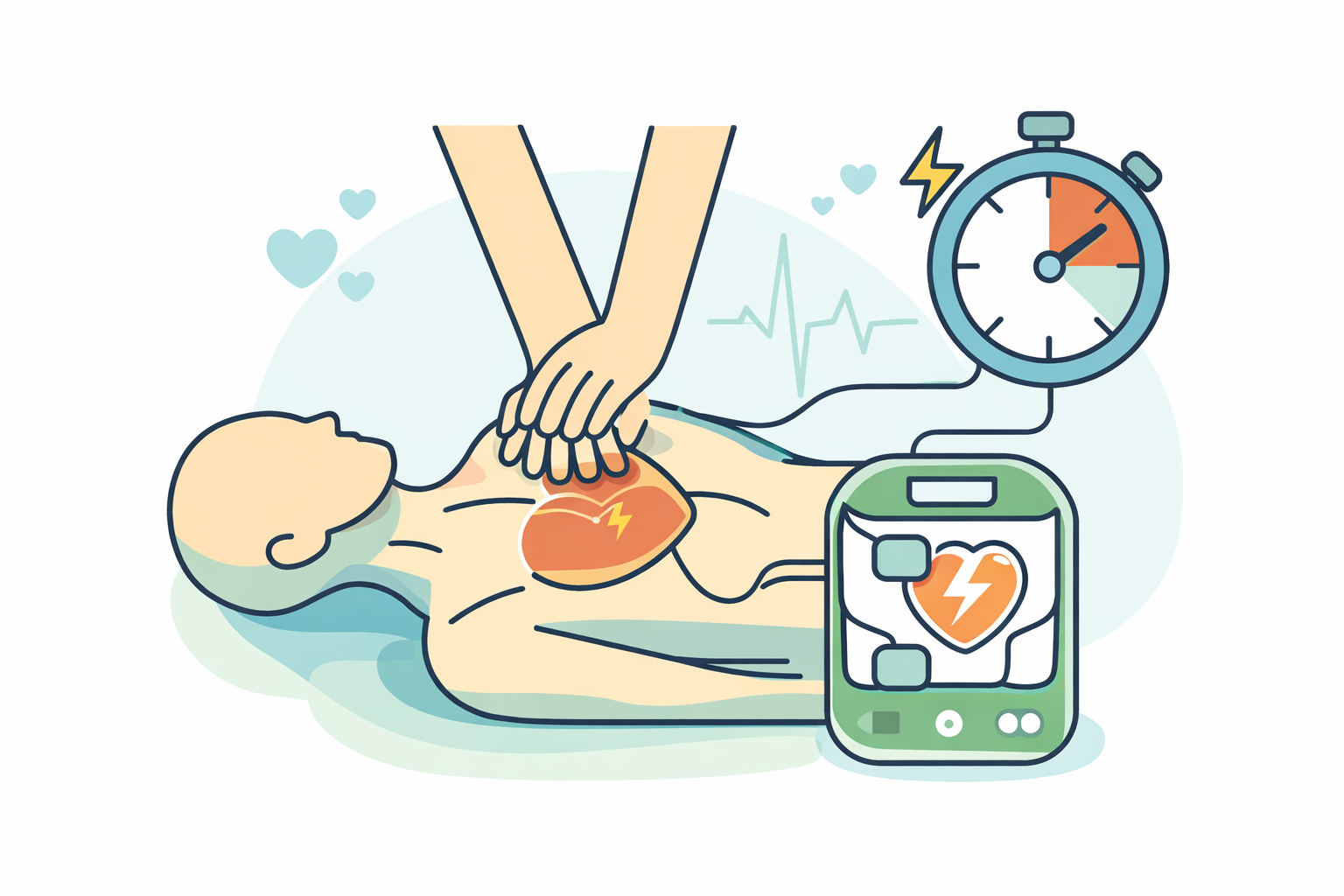
- 0–4 minutes: Brain injury is less likely
- 4–6 minutes: Brain injury becomes more likely
- 6–10 minutes: Risk of serious brain injury increases
- Over 10 minutes: Survival becomes much less likely without CPR and defibrillation
CPR CAN MEAN LIFE
When someone’s heart stops, every minute counts. CPR helps keep blood and oxygen moving to the brain until emergency help arrives.
Each year in the United States, more than 350,000 people experience a cardiac arrest outside of a hospital. Without immediate help, most of these events are fatal. When CPR is initiated promptly, the likelihood of survival increases two- to threefold.
During a cardiac arrest, time is critical. Brain injury can begin within four to six minutes without oxygen. After ten minutes, severe and irreversible brain damage is likely, and successful resuscitation becomes much more difficult.
In this course, you’ll learn what CPR is, when to start, and how to perform it with confidence. The training is organized into clear sections for adult, child, and infant CPR, so you can focus on the skills that matter most in each situation. Each section is followed by a short review and an instructor-led video to reinforce key steps and help you feel prepared before moving on.